
How system integration aligns technology with business operations
How many separate applications does your organisation rely on every day? For many enterprises the answer is comfortably above two hundred. When those systems do not talk to each other, your people spend time reconciling data, chasing errors and making decisions on fragmented information. The result is slower operations, hidden costs and missed opportunities.
System integration changes that. With a clear technology integration strategy and a disciplined approach to System Integration Testing (SIT), you can align platforms, data flows and workflows with your operational goals. In this article we outline how enterprise system integration delivers business technology alignment, where integrated system testing fits, and the practices that reduce risk while accelerating value.
Want a faster path to integrated systems? Our digital team aligns technology with real operations for measurable outcomes.
Understanding system integration testing in business context
System Integration Testing, often shortened to SIT, is the stage where individual applications are validated as a connected whole. Instead of proving that each component works in isolation, you prove that systems exchange data correctly, support real business scenarios and behave predictably under realistic conditions.
This matters because business outcomes are created across processes, not within a single application. Integrated system testing therefore focuses on end to end flows that mirror the way work actually happens, from order to cash, procurement to payables, or lead to revenue.
The core purpose of SIT
Effective systems integration testing confirms that interconnected applications behave as intended and, more importantly, that they enable the business processes they were designed to support. A rigorous system integration test uncovers defects at integration points where they are most likely to hide, such as message transformations, data mappings and hand-offs between queues or services.
Guidance from recognised standards, such as the IEEE software testing standards documentation, emphasises that test design must reflect real operational scenarios and decision paths. When test cases mirror the way users actually work, you reduce the risk of production surprises.
Why traditional testing falls short
Testing each system on its own can create a false sense of security. An application may pass unit and component tests yet fail the moment it needs to exchange data with a partner system or respect a downstream constraint. Unit tests rarely exercise cross functional data flows, so incompatibilities only surface under real usage.
Enterprise system integration tackles this head on with end to end validation. By designing and executing complete journeys, you confirm that technology genuinely supports how your organisation operates, not just how it was specified on paper.

Key components of effective systems integration testing
Strong systems integration testing relies on a structured methodology and disciplined execution. The quality of your business technology alignment is only as good as the rigour you apply to every stage, from planning to final sign off.
Mastering the following elements will set up your enterprise system integration for durable success.
Essential SIT testing phases
A practical SIT testing methodology typically includes five interlocking phases that build confidence step by step:
- Test planning that defines scope, high risk scenarios and business acceptance criteria linked to measurable outcomes
- Environment configuration that mirrors production constraints, data volumes and security rules
- Methodical execution of each system integration test with complete traceability from requirement to result
- Defect management with clear prioritisation, root cause analysis and targeted non regression testing
- Final validation that confirms the solution meets operational requirements under representative loads
Independent bodies such as the International Software Testing Qualifications Board highlight the value of structure and traceability. See the ISTQB integration testing best practices for guidance on skills, artefacts and collaboration patterns that drive reliable outcomes.
Integration points that matter most
Not every interface carries the same risk. Data exchange boundaries deserve focused attention because they determine the integrity of cross process operations. Application Programming Interface contracts, message schemas and transformation rules are frequent sources of subtle defects.
Workflows that traverse several systems warrant deeper coverage. When a single customer journey crosses customer relationship management, billing and finance, a small misalignment can ripple into duplicate records, delayed postings or inconsistent balances.
That is why integrated system testing should concentrate on the hand-offs that make or break business continuity.
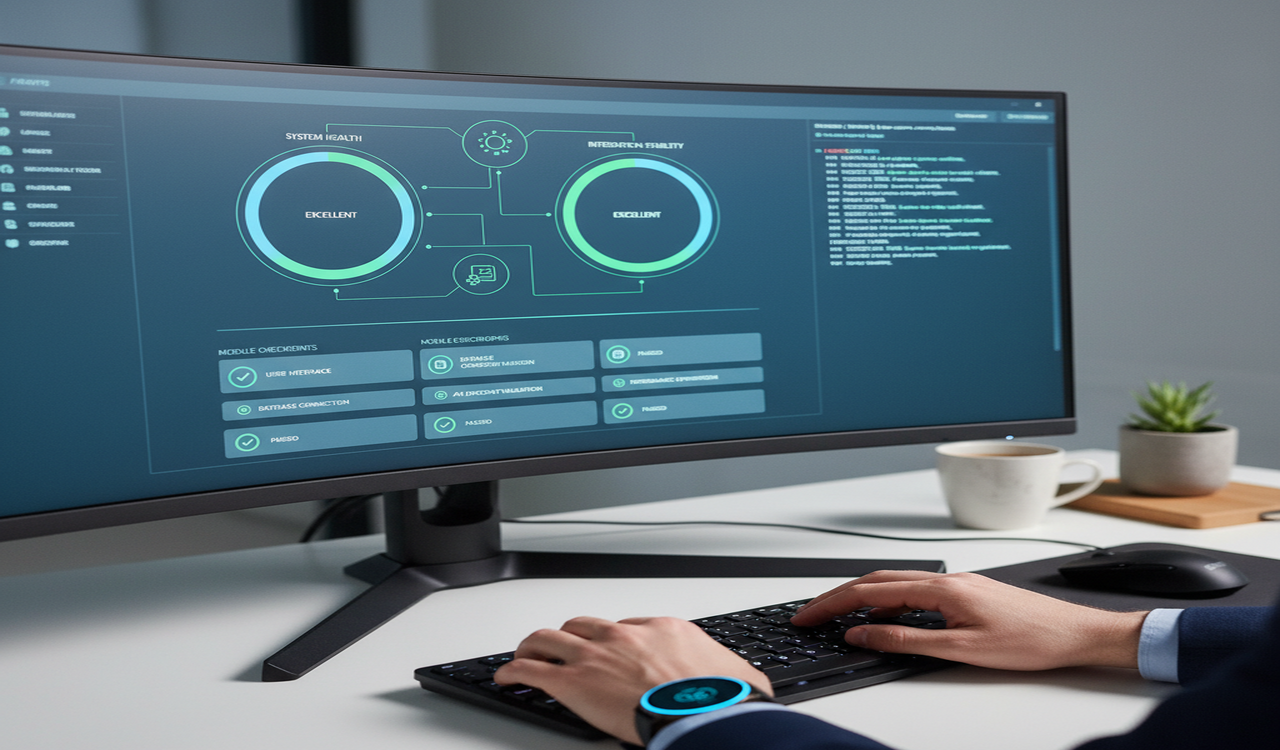
Aligning technology integration with business operations
Connection is not the goal. Contribution is the goal. The purpose of enterprise system integration is to enable faster, cleaner, more reliable operations. That means prioritising business outcomes in every testing decision, from which scenarios to automate to which defects block go live.
From technical testing to business value
Well executed system integration testing delivers benefits you can measure. Fewer data entry errors and duplicate records increase data quality, which directly improves planning, reconciliation and customer communications. Processing time drops when systems exchange information cleanly and consistently.
Independent research on the value of information technology backs this up. For instance, a Gartner business value information technology integration study discusses how clearly communicated outcomes and robust integration can accelerate transactional processes and reinforce cost control.
There is also a service dimension. When data flows instantly between teams, customers receive joined up answers rather than fragmented updates. That is how business technology alignment turns infrastructure into an operational advantage.
Cross functional collaboration in integration
Integration is a team sport. Involve business stakeholders early so your test design reflects real life workflows and exceptions. Information technology teams bring the technical depth to design resilient interfaces and reliable test harnesses. Together they ensure that what is tested is exactly what matters.
A practical approach is to frame each end to end scenario as a business question. For example, can a sales credit be raised, approved and posted to the ledger within the required time? If the answer is yes in SIT, you are reducing risk where it counts.

Best practices for implementing integrated system testing
Successful enterprise system integration blends structure with pragmatism. The practices below help teams move faster without sacrificing quality, especially when timelines are tight and dependencies are complex.
Practical steps to SIT success
Apply these steps to improve predictability and shorten feedback loops:
- Agree objectives, scope and success criteria with all stakeholders before the first test case is written
- Design test cases that mirror real user journeys and critical business scenarios, not just interface calls
- Adopt test automation for repeatable checks and regression coverage while keeping human validation for high consequence decisions
- Iterate frequently so that fixes are verified quickly and learning is folded into subsequent cycles
- Document decisions, data sets and outcomes so future teams can maintain and extend with confidence
Common integration pitfalls to avoid
Thin coverage is the most frequent failure mode. When secondary flows are ignored, surprising defects surface during peak periods or unusual conditions. Edge cases deserve attention because they reveal mismatches that happy path testing will never find.
Poor communication between technical and business teams is another hazard. Siloed work creates assumptions that go unchallenged. A shared vocabulary, clear defect triage and visible acceptance criteria keep everyone aligned on what success looks like.
Enterprise system integration has become a strategic pillar of organisational performance. A disciplined system integration testing approach ensures that technology genuinely serves your operating model, turning isolated applications into a coherent ecosystem. As architectures grow more complex, integrated system testing will rely even more on automation and artificial intelligence. For leaders focused on automation and operational efficiency, that evolution is an opportunity to increase resilience and speed without adding complexity.
FAQ
Share this article
Help others align technology with their business operations